Family History
The primary purpose of family history in The Church of Jesus Christ of Latter-day Saints is to identify ancestors to perform essential, saving temple ordinances (such as baptism and sealing) on their behalf. This work enables families to be united eternally, offers deceased ancestors the opportunity to accept the gospel, and strengthens the spiritual connection of living members.
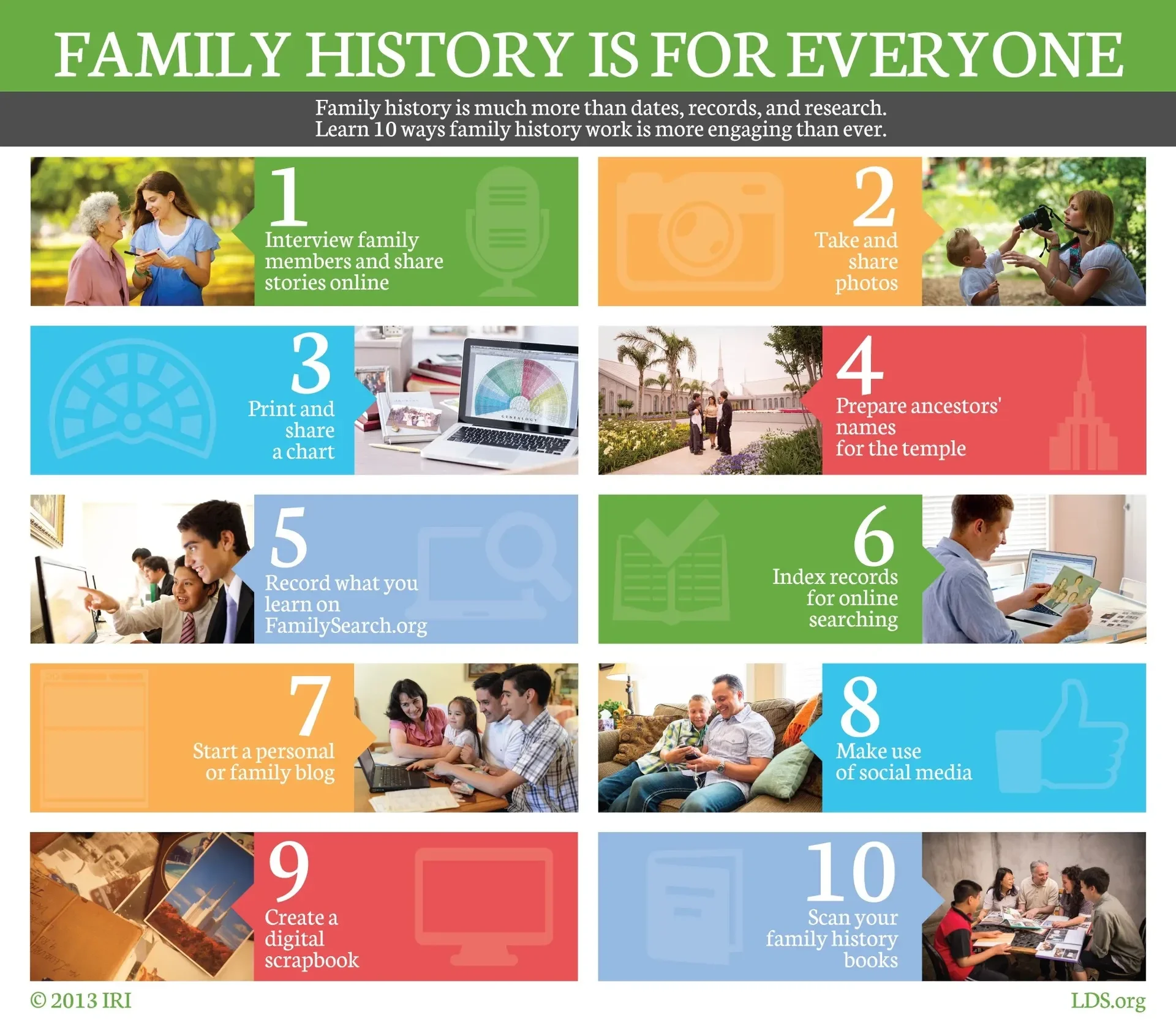
Family History is for everyone
1. Interview family members and share stories online
2. Take and share photos
3. Print and share a chart
4. Prepare ancestors' names for the temple
5. Record what you learn on FamilySearch.org
6. Index records for online searching
7. Start a personal or family blog
8. Make use of social media
9. Create a digital scrapbook
10. Scan your family history book
Family Search
FamilySearch.org is the world's largest free genealogy organization, operated by The Church of Jesus Christ of Latter-day Saints. It provides billions of searchable, digitized historical records, photos, and family stories, alongside the world's largest shared family tree. It offers extensive worldwide records, a digital book library, and free help through over 5,000 local centers.
Key features of FamilySearch.org include:
- Massive Free Database: Access billions of records from over 170 countries, including birth, marriage, death, census, and military records.
- Shared Family Tree: A collaborative, global family tree where users work together to build a single, accurate, and interconnected pedigree.
- Digital Library: Access to over 450,000 digitized genealogy books, including histories, gazetteers, and, obituaries.
- Family History Centers: More than 5,000 local locations worldwide offer in-person research assistance and access to premium services.
- Memories: A feature allowing users to upload and preserve photos, documents, and audio stories of ancestors.
RootsTech: FamilySearch hosts the world's largest family history conference, RootsTech, annually.
Roots Tech
RootsTech, hosted by FamilySearch and The Church of Jesus Christ of Latter-day Saints, is a major annual hybrid conference and year-round, free digital library dedicated to genealogy education. It features expert-led classes, technology demonstrations, and the "Relatives at RootsTech" tool for discovering family connections. Click on the button below to access FREE classes on how to preserve your family history.

Stake Family History Center
Address: 3001 S Apopka Vineland Rd, Orlando, FL 32835
Hours:
Sunday - Appointment Only
Monday - 9:30 am - 12:30 pm
Tuesday - 9:30 am - 12:30 pm
Tuesday - 6:00 pm - 9:00 pm
Wednesday - 6:00 pm - 9:00 pm
Thursday - Appointment Only
Getting Started - Four Generations
Address: 8450 Silver Star Rd, Ocoee, FL 34761
The Ocoee Ward has a family history representative in each quorum and class. Ask your respective presidency who the family history representative is to get started on your path to recording your family history.
There are also two family history specialists in the ward that can assist you in getting started. Your quorum or class family history representative can help you set up an appointment as needed.
Indexing
Why Indexing Matters
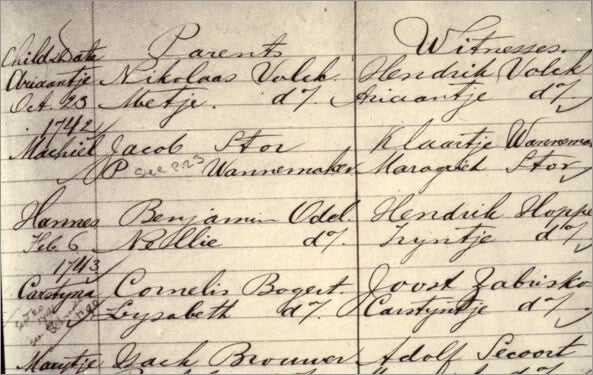
- The names, dates, and places on historical records are nearly impossible to find until they get indexed. Indexing puts these details into a digital format and makes them easy to search online.
How Indexing Works
- Historical documents—like birth certificates, military records, or censuses—contain important information about our ancestors' lives. Indexing makes those raw details findable on FamilySearch.
It's a 4-step process:
1. Camera operators take photographs of the historical records.
Trained camera operators visit libraries or archives around the world to capture digital images of the historical records stored there.
2. Images are scanned and transcribed using AI-technology.
Back at FamilySearch, special software is used to scan the images and transcribe names, dates, places, and other key details and organize it in a searchable database.
3. Volunteers review and verify the transcription.
Volunteers check the transcription to ensure that the names, dates, and places match the information that appears in the image of the record.
4. New discoveries await at FamilySearch.
People searching for their ancestors can visit FamilySearch and quickly find records with new details about their family.

Genealogy and the Orange County Library System
The Orange County Library System's genealogy collection is located at the West Oaks Branch & Genealogy Center (1821 E Silver Star Rd, Ocoee FL 34761). It includes an extensive collection of genealogy reference books organized by state as well as a sizable collection of donated family histories organized by surname. The core collection began as a gift from avid genealogist Captain Charles Albertson in 1923. Then in 1929 the Library became the official repository of the Florida State Society of the Daughters of the American Revolution. The collection now contains close to 40,000 books.
- FamilySearch Affiliate Library
FamilySearch has the biggest collection of genealogical records in the world, and The West Oaks Branch & Genealogy Center is now a FamilySearch Affiliate Library. Create a free FamilySearch account and come in to the West Oaks Library to view limited-access collections of digitized records and books that are only available at Affiliate libraries.
"Among the marvelous habits that should be normal for members of the Church: Frequent participation in temple and family history work. This work is the means of uniting and sealing families for eternity." - Elder Rafael E. Pino
"And now, my dearly beloved brethren and sisters, let me assure you that these are principles in relation to the dead and the living that cannot be lightly passed over, as pertaining to our salvation. For their salvation is necessary and essential to our salvation, as Paul says concerning the fathers—that they without us cannot be made perfect—neither can we without our dead be made perfect." - Doctrine and Covenants 128:15
This is not an official website of The Church of Jesus Christ of Latter-day Saints.